
A smart home does not have to be built all at once. Most of our clients start with one or two upgrades, live with them for a while, and add more later. These are the five that make the biggest everyday difference in a Nigerian home, in the order we usually recommend them.
1. A proper home network
Every smart device depends on your Wi-Fi. If the signal is weak in the bedrooms or drops when the power changes over, nothing else will work reliably.
- Use a mesh Wi-Fi system or wired access points so every room and the compound get strong coverage.
- Put the router and network equipment on a UPS or inverter, so the system stays online during changeovers.
- Where possible, run network cable to the TV, office and outdoor camera positions while the walls are open.
This is the least exciting upgrade, and the one that decides whether everything else is a pleasure or a frustration.
2. Gate automation
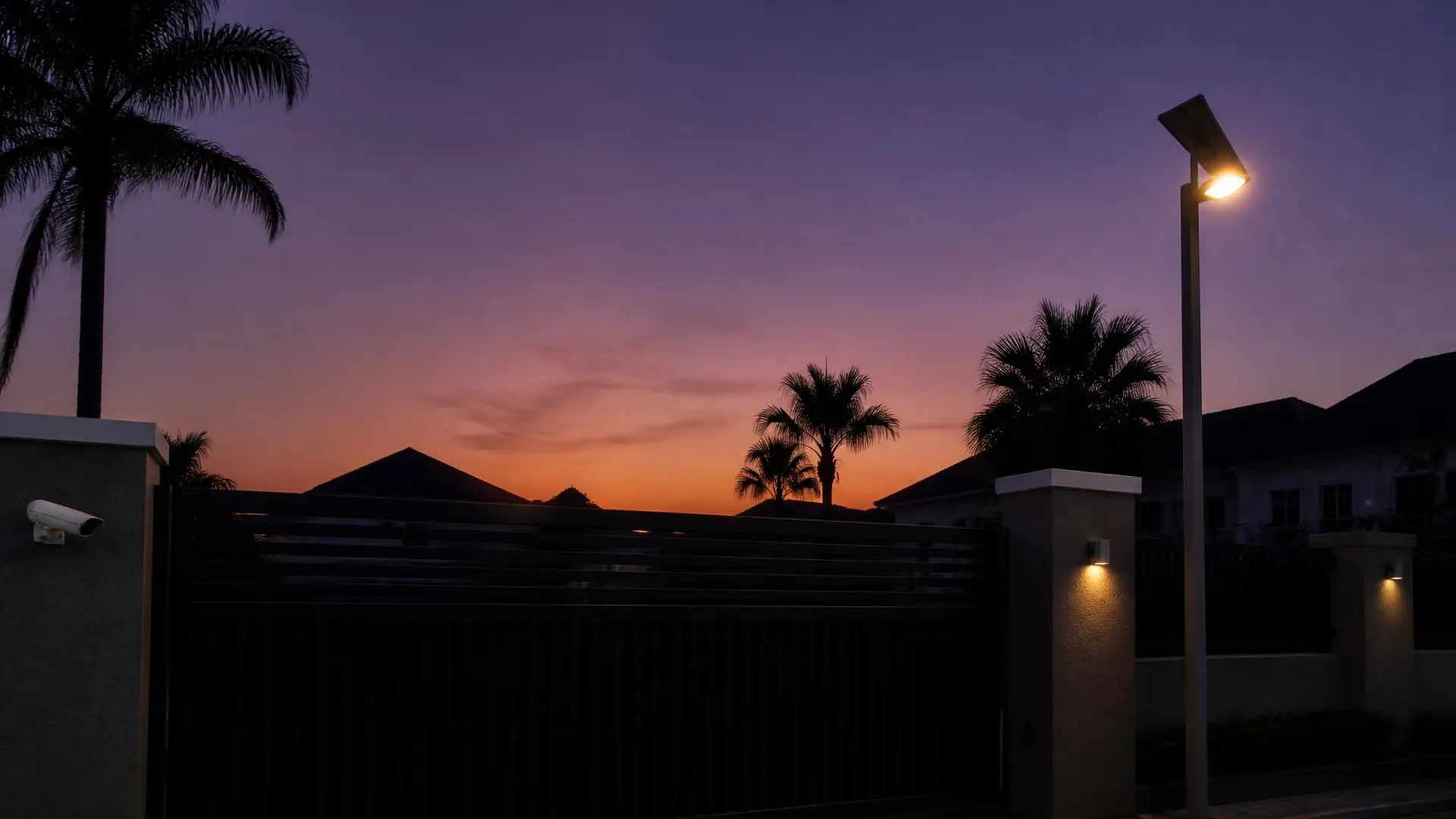
For most homes, an automatic sliding or swing gate is the upgrade the family notices most. No more waiting in the car, or someone running out in the rain.
- Choose a motor rated for the weight of your gate, with a battery backup so it still opens during power cuts.
- Insist on safety photocells that stop the gate closing on a person or car.
- Add a video intercom at the gate so you can see who is there and open it from your phone.
3. Smart lighting
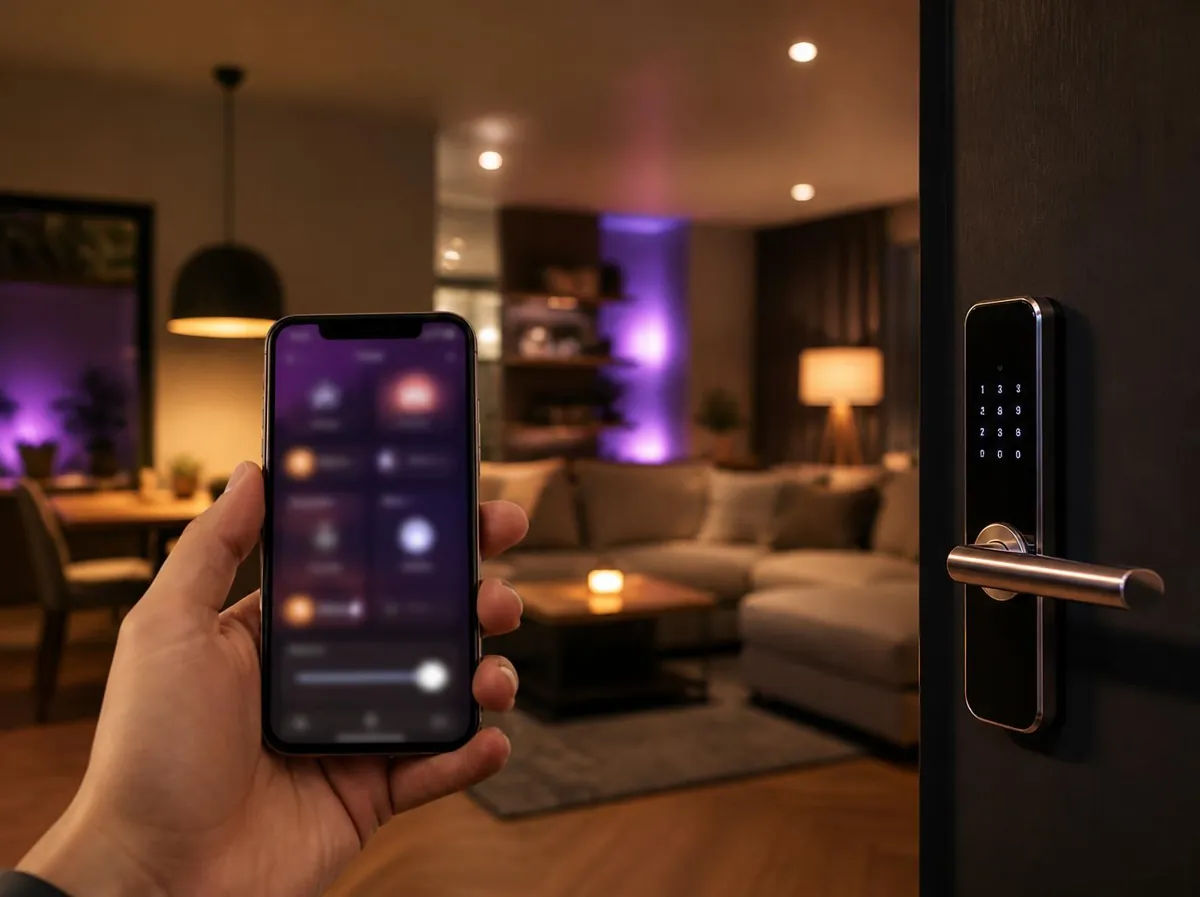
Scenes (“evening”, “away”, “all off”) and schedules make the house feel looked-after, and lights that switch on at dusk make an empty house look occupied.
One thing to check first: many smart switches need a neutral wire in the switch box, which a lot of Nigerian homes do not have. There are “no-neutral” switches that work without it, but we check the wiring before recommending a product.
4. Cameras you can check from your phone
Indoor and outdoor cameras, viewed in the same app as the rest of the house, give peace of mind when you travel. A video doorbell or gate camera is a good first step. For full coverage, a small IP camera system with a recorder is more reliable than separate Wi-Fi cameras, because footage stays at home even when the internet is down.
5. Air conditioning and power control
Smart AC controllers let you cool the bedroom before you arrive and switch off units someone forgot. Combined with your inverter or solar system, smart controls can also make sure only the important circuits run on battery, so it lasts longer through an outage.
Three rules that save money
- Protect against power surges. Voltage fluctuation kills electronics. A good surge protector or stabiliser for the smart devices is cheaper than replacing them.
- Prefer systems that work without the internet. Choose products that still switch locally when the internet is down, and use the app for remote control on top.
- Plan for growth. Pick one platform that can grow with you, rather than a different app for every device.
How we help
We plan smart homes room by room around how you actually live, starting with the network and power that everything depends on. Start with one upgrade and add more later without starting over.