
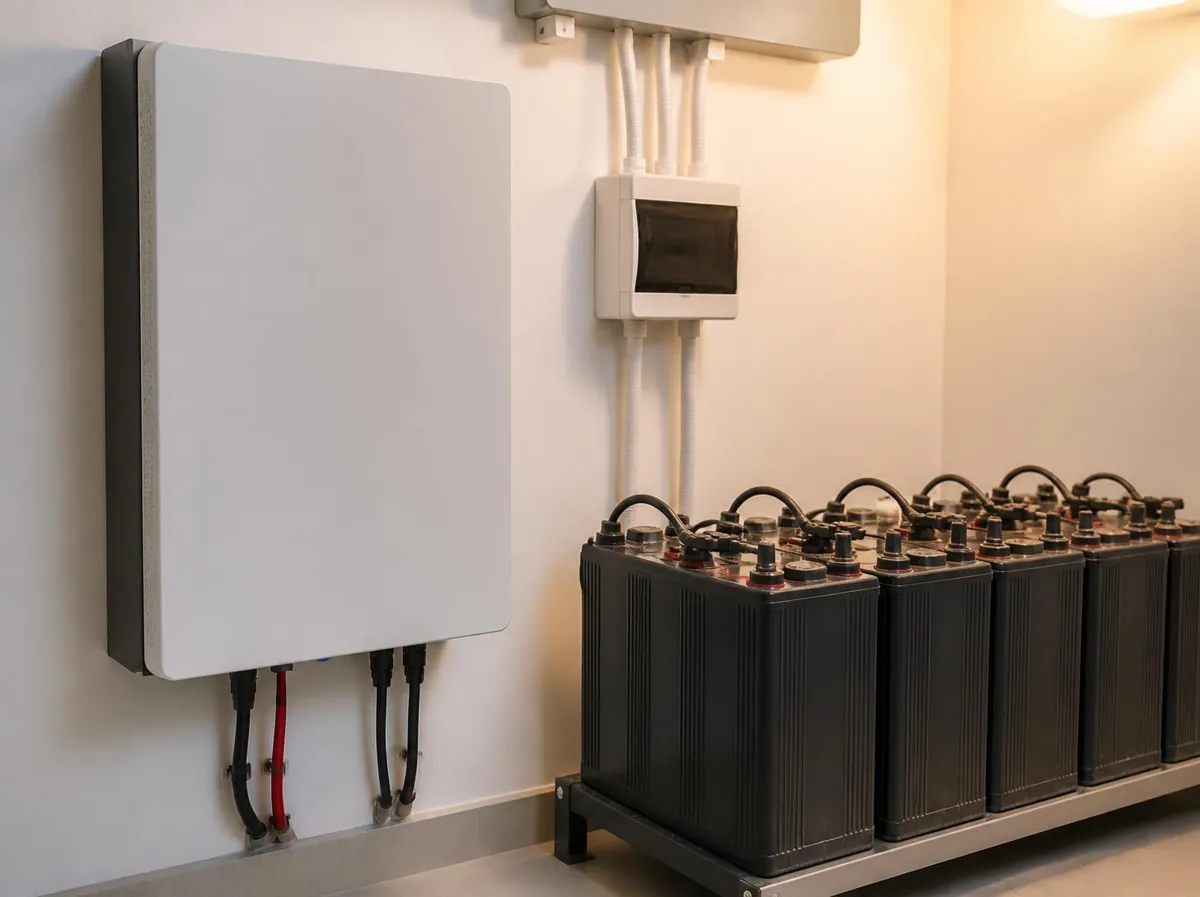
The battery is usually the most expensive part of a solar or inverter system, and the part that decides how long the system lasts. Most people in Nigeria now choose between two types: lithium (almost always LiFePO4, lithium iron phosphate) and lead-acid (tubular, AGM or gel). Here is how they really compare.
The short answer
Lithium costs more upfront but usually costs less over the life of the system, because it lasts much longer and you can use more of its capacity. Lead-acid is cheaper to buy, and still makes sense for small systems, tight budgets, or backup that is rarely used.
How much of the battery you can actually use
A battery’s label shows its total capacity, but you cannot use all of it without damaging it.
- Lead-acid: to get a reasonable life, you should only use about 50% of its capacity each day. A 200 Ah, 12 V lead-acid battery (2.4 kWh on the label) gives you about 1.2 kWh of daily use.
- Lithium (LiFePO4): you can routinely use 80–90%. A 2.4 kWh lithium battery gives you about 2 kWh.
So for the same daily need, you need almost twice as much lead-acid capacity as lithium.
How long they last
Batteries wear out by cycles (one charge and discharge).
- Lead-acid typically gives somewhere between 500 and 1,500 cycles, depending on type and how deeply it is used. In daily use that is often 2 to 4 years.
- LiFePO4 typically gives 3,000 to 6,000 cycles at 80% depth, which in daily use can be 8 years or more.
Heat shortens the life of both, which matters in Nigeria. Keep batteries in a shaded, ventilated space and never in direct sun.
The real cost: cost per usable kWh over its life
Instead of comparing price tags, compare what each battery costs for every kWh it will deliver before it needs replacing:
Cost per kWh = purchase price ÷ (usable kWh per cycle × number of cycles)
When you plug real prices into this, lithium usually wins for anyone who uses their batteries every day, even though the upfront price is higher. Lead-acid can win when the batteries are only used occasionally, because then they age from time rather than cycles.
Other differences that matter
- Maintenance: flooded and tubular lead-acid batteries need water topping and ventilation for the gas they release. Lithium needs no maintenance.
- Charging speed: lithium accepts charge faster, which helps solar systems make the most of a short sunny period.
- Weight and space: lithium is roughly a third of the weight for the same usable energy and often mounts on a wall.
- Battery management (BMS): good lithium batteries have a built-in BMS that protects each cell. Ask whether it can talk to your inverter (usually over CAN or RS485), so the inverter charges it correctly.
- Mixing: never mix old and new batteries, or different types, in one bank.
What to ask before you buy
- What is the warranty, in years and in cycles, and is it honoured in Nigeria?
- Is the inverter compatible with the battery, and set up for its charging profile?
- How much usable energy (kWh) will I get per day, not just the Ah rating?
- Where will the battery be installed, and is that space cool and ventilated?
How we choose
We size batteries from a load audit: what you run, for how long, and when. Then we show you the options with their usable capacity, expected life and cost per kWh, so you can choose with the full picture rather than the sticker price.